Human Trafficking How to Know if You Re a Target
This article explains the homo trafficking process and the tactics used by human traffickers to exploit vulnerable people.
For a deeper understanding of the underlying issues behind Human being Trafficking, take our Human Trafficking & Modern Slavery Training Class. Information technology shows the steps you can take in your business to ensure you proactively work against it.
What is Human Trafficking?
Man trafficking is a highly organised crime. Traffickers take people from one area of a land to some other or across borders, and when they arrive, they force their victims into exploitation.
Trafficked people are exploited sexually, placed in domestic servitude, agricultural work, begging, manufacturing, structure, and organ harvesting amongst a host of other exploitative purposes.
It is not the same as people smuggling.
In legal terms, human being trafficking is 'the recruitment, transportation, transfer, harbouring or receipt of persons, using:
- Threats and strength or other forms of coercion;
- Abduction;
- Fraud and charade;
- Corruption of power or abuse of a position of vulnerability, and
- The giving or receiving of payments or benefits to achieve control over another person for the purpose of exploitation.'
Trafficking has 3 steps: activeness, means, and exploitation. Child trafficking has 2 steps: action and exploitation. This is because means is irrelevant every bit children can't legally consent.

Why Does Homo Trafficking Happen?
Trafficking happens because:
- It's highly profitable (the profit margins are higher than almost any other industry in the globe).
- It's difficult to find, trafficking is a 'subconscious criminal offense'. We have limited data on how information technology operates, and therefore, we have limited ways to tackle information technology.
- The penalty is often "worth the offense" in the eyes of traffickers because laws and penalties are also lenient.
Who are Human being Trafficking Victims?
Human being traffickers target the earth's poorest and nigh vulnerable people. Fake promises of lucrative jobs, stability, didactics, income or romance lure in potential victims. Victims also accept varied levels of educational activity, socio-economic, indigenous, and religious backgrounds, and are men, women, adults, children and even newly born children.
The most common victims of human trafficking are women and children from poor, rural areas in developing countries. In America, women make up 91% of sex trafficking cases and 57% of labour trafficking cases.
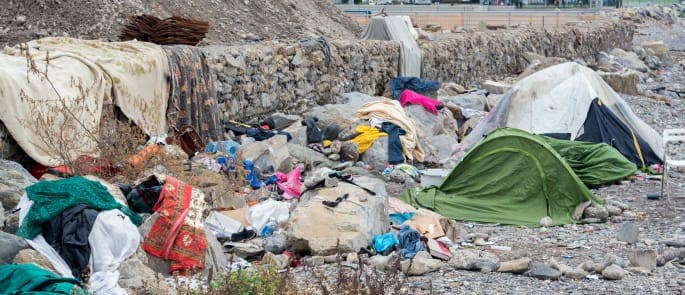
Refugee camps are also targeted by traffickers as they are an easy mode to learn victims. Refugees tin't piece of work in their host country; they live in crowded, dirty weather condition with a lack of warmth, stability, and food. And then, when traffickers promise them jobs elsewhere and prophylactic passage, their vulnerability is all too piece of cake to exploit.
What are Human Trafficking Recruitment Tactics?
As long as trafficking remains profitable, hard to detect, and hard to punish, traffickers volition create new ways to exploit their victims.
Common methods used to traffick humans include forms of charade similar:
- Seduction and romance,
- False job advertisements,
- Lies about educational or travel opportunities,
- Abduction,
- Sale by family, and
- Recruitment through former slaves.
The 'Loverboy' Tactic
A 'Loverboy' or 'Romeo Pimp' is someone (usually a young human being) who seduces someone (usually a immature woman) to force them into prostitution or other illegal work. Information technology's a form of preparation and abuse.
Loverboys form romantic relationships with their victims. Merely this relationship rapidly turns into an emotionally and psychologically abusive 1. Loverboys use blackmail and violence to intimidate their victims into compliance.
Other tactics include painting a picture of a wonderful life together abroad or elsewhere in a land. They aim to isolate the victim from their family or community and in some cases forcefulness them to terminate upwards in a country where they tin't speak the common linguistic communication.
Using romance makes it easier for loverboys to move their victims beyond borders considering when victims are deceived, they go willingly and ofttimes pay associated transport fees.
When they arrive, they fall into the easily of traffickers. And information technology is just a thing of time before they discover the true nature of their loverboy.

Imitation Job Advertisements
Traffickers employ enticing offers such as employment or travel to lure vulnerable people into the hands of those who volition exploit them. These offers are always false, but they have convincing fronts.
Traffickers tend to post opportunities in legitimate newspapers using a registered business organization equally a front. Countries who are experiencing an economic downturn, civil strife and instability are often targeted because citizens there are looking for ways to leave or make a life elsewhere.
These jobs are often for nanny or au pair positions or in the hospitality and tourism industry. These people will pay for their own flights and arrive in the country legally with all their documents. On inflow, these are seized and a process of 'breaking in' happens.
'Breaking in' involves a serial of emotional, physical, and psychological abuses such as rape, torture, threats, deposition, and the forced consumption of drugs and booze. This happens mercilessly during the acquirement period to break the spirit of trafficked victims. Survivors have besides said that shortly afterwards arrival they witnessed the murder of other victims. This causes victims to go into a self-preserving state of compliance.

Auction by Family
In some areas of the world, unimaginable levels of poverty, debt, desperation and displacement cause families to sell their children to traffickers. And it's the pressure level to convalesce these hardships and bring some money to the family that causes some families to sell a child into modern slavery.
In rare cases, parents sell a child out of greed and receive a monthly income. These families oft build relationships with traffickers and will misrepresent the nature of the piece of work to entice other families to sell their children.
Recruitment through Former Slaves
Siddharth Kara is the writer ofSex Trafficking: Inside The Business of Modern Slavery.He spent years researching the trafficking manufacture and interviewing its victims and is a world skilful on homo trafficking. His piece of work offers incredible insight into the industry and he provides a profound assay of how and why trafficking is such big concern for organised criminals.
Writing about his experiences, he says that this "mode of acquisition was the nigh hard … to take". He says "equally I learned more about the circuitous psychology of sexual enslavement, I began to understand. Sex slaves employ numerous adaptive mechanisms to survive their ordeals, including drug and alcohol abuse and the morose credence that the life of a slave is the best life they deserve".
Trafficking victims tend to distrust public officials and they brainstorm to come across slavery every bit their but choice (especially in the sex trafficking industry). Their madams or traffickers will increasingly offering more freedom, while the threat of abuse lingers over them causing an abusive human relationship to develop between abuser and victim (think Stockholm Syndrome).
Kara met many erstwhile slaves (now prostitutes). They "dressed in the finest clothes" and received "commissions for each new slave they recruited".

The Corruption of Religious Beliefs
Sadly, Nigeria has gained a reputation as a hub for sourcing slaves, moving people, and a destination for trafficked people. In fact, in Nigeria, homo trafficking is the 3rd most common crime subsequently financial fraud and drug trafficking.
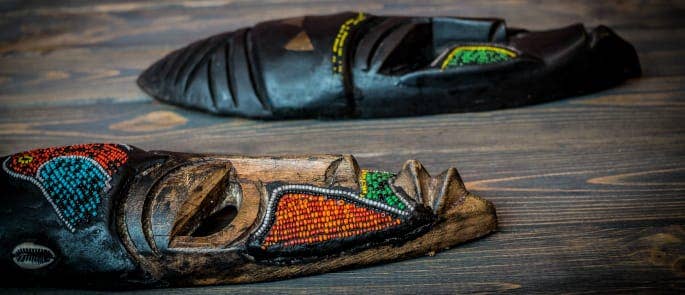
In the Republic of benin region of Nigeria, traffickers recruit the Edo People using a unique method. Traffickers corruption an element of their conventionalities system to place psychological bonds on their victims during juju ceremonies.
In these ceremonies, victims get to a shrine where they will take an oath earlier a priest. The priest uses their body hair and fingernails to make a vessel or figurine which exerts control over the victim. And this ceremony places them under an obligation to repay their debt one time they arrive in their destination land.
During the oath, victims promise that they won't run away, to obey their trafficker, to keep silent and never speak to officials, and to pay dorsum all the money they owe their trafficker. Indeed, the girls believe that to break the oath would cause grave, if not fatal consequences for the victims family.
Nigerian victims are often taken to be sexually exploited in Italy and other locations. They are as well forced into exploitative labour, begging, money laundering operations, and fifty-fifty organ transplantation.
Abducted into Homo Trafficking
Abduction is much rarer than films like Taken might lead the public to believe. This is because abduction makes information technology harder to send someone. Abducted victims are more likely to attempt an escape during the transportation stage of trafficking.
However, it does happen. In India, abducted children work 16 60 minutes days in tea fields picking tea.
'Baby Factories' in Nigeria
The term 'baby manufactory' refers to the forced impregnation, sale or illegal adoption of an babe in a location where a adult female or girl is held against her will.
These farms or factories are "any accommodation where mostly underage pregnant girls are kept with or without their consent, or immature girls are encouraged or forced to get meaning, for the purpose of giving nativity to babies that are sold to diverse clients".
Other terms you might run into in reference to this are 'baby harvesting' and 'baby farming'. This latest phenomenon is fast becoming one of the well-nigh assisting organised crime activities in Nigeria.
Infant farming operations normally happen in registered organisations. These look like hospitals, maternity homes, orphanages, and rehabilitation centres. Simply that is often a disguise. The people working in them are unregistered. And these facilities are often mentioned in cases of abduction and child trafficking.
Further Resources:
- Writing a Modern Slavery Policy: Guidance for Employers
- Human Trafficking & Modern Slavery Online Training
- Safeguarding Adults Training
collinsimpeartale1949.blogspot.com
Source: https://www.highspeedtraining.co.uk/hub/methods-of-human-trafficking/
0 Response to "Human Trafficking How to Know if You Re a Target"
Post a Comment