An Artist Who Uses Art to Comment on the Dehumanizing Potential of Technology Is
If you crack open up a medical textbook, chances are every analogy inside will be of a Caucasian person.
Chidiebere Ibe, a 25-year-erstwhile Nigerian medical illustrator and outset-year medical student, always thought it was bizarre that the public wellness pamphlets he received growing up showed only images of white bodies. "There would exist an illustration of measles and information technology would exist on Caucasian skin," he tells me. "These were being handed out to a Nigerian population. Our pare is Black."
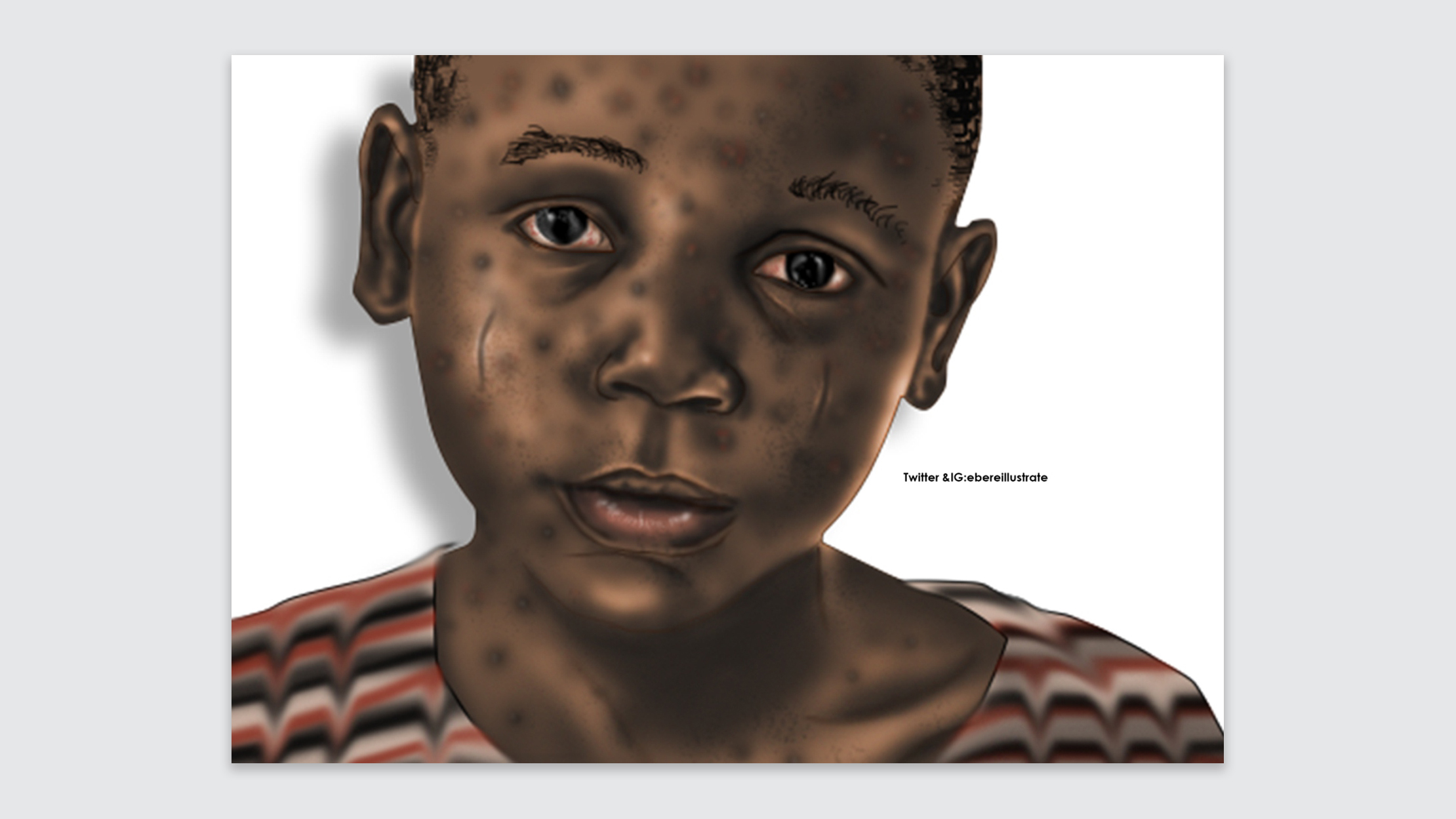
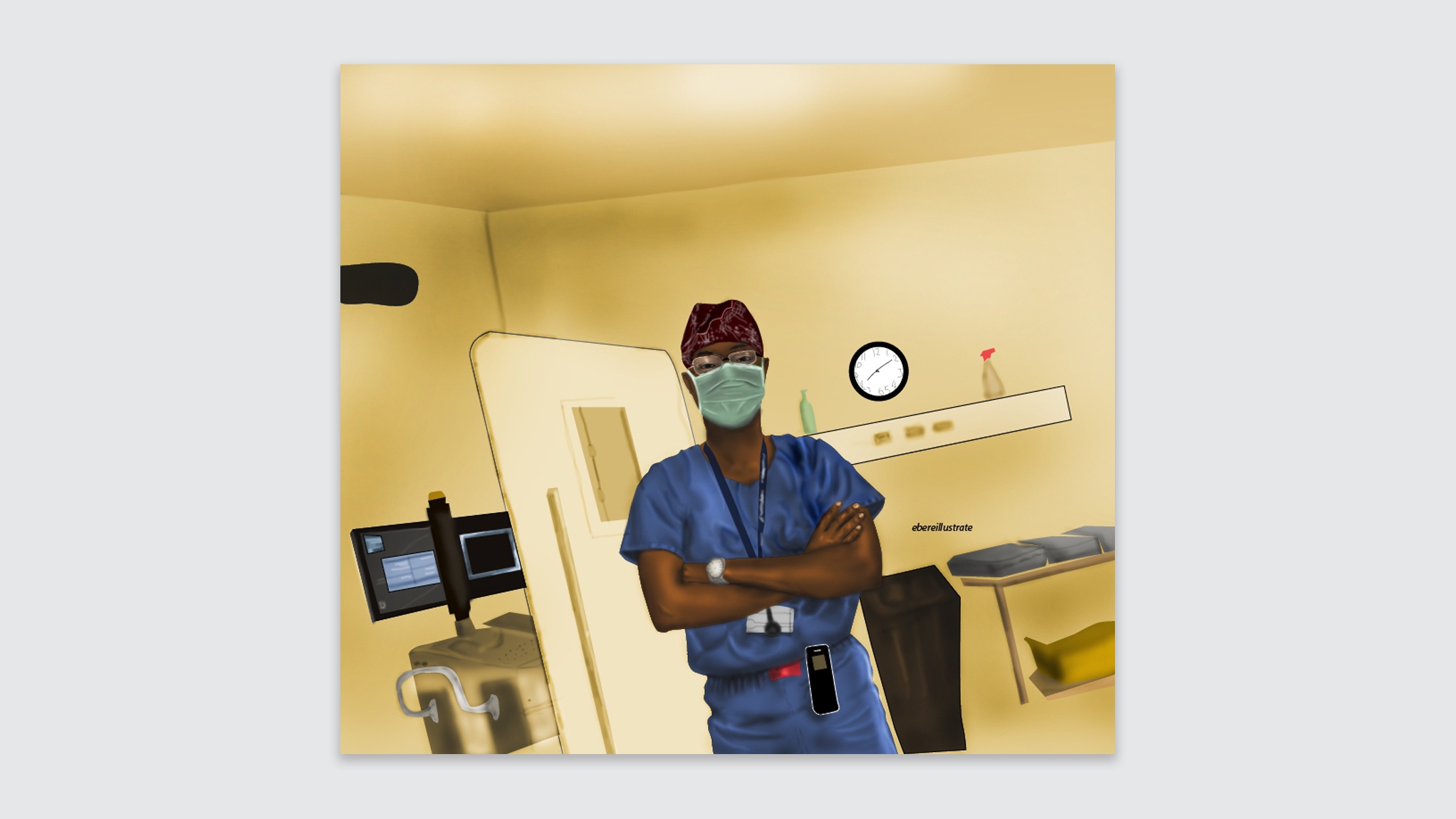
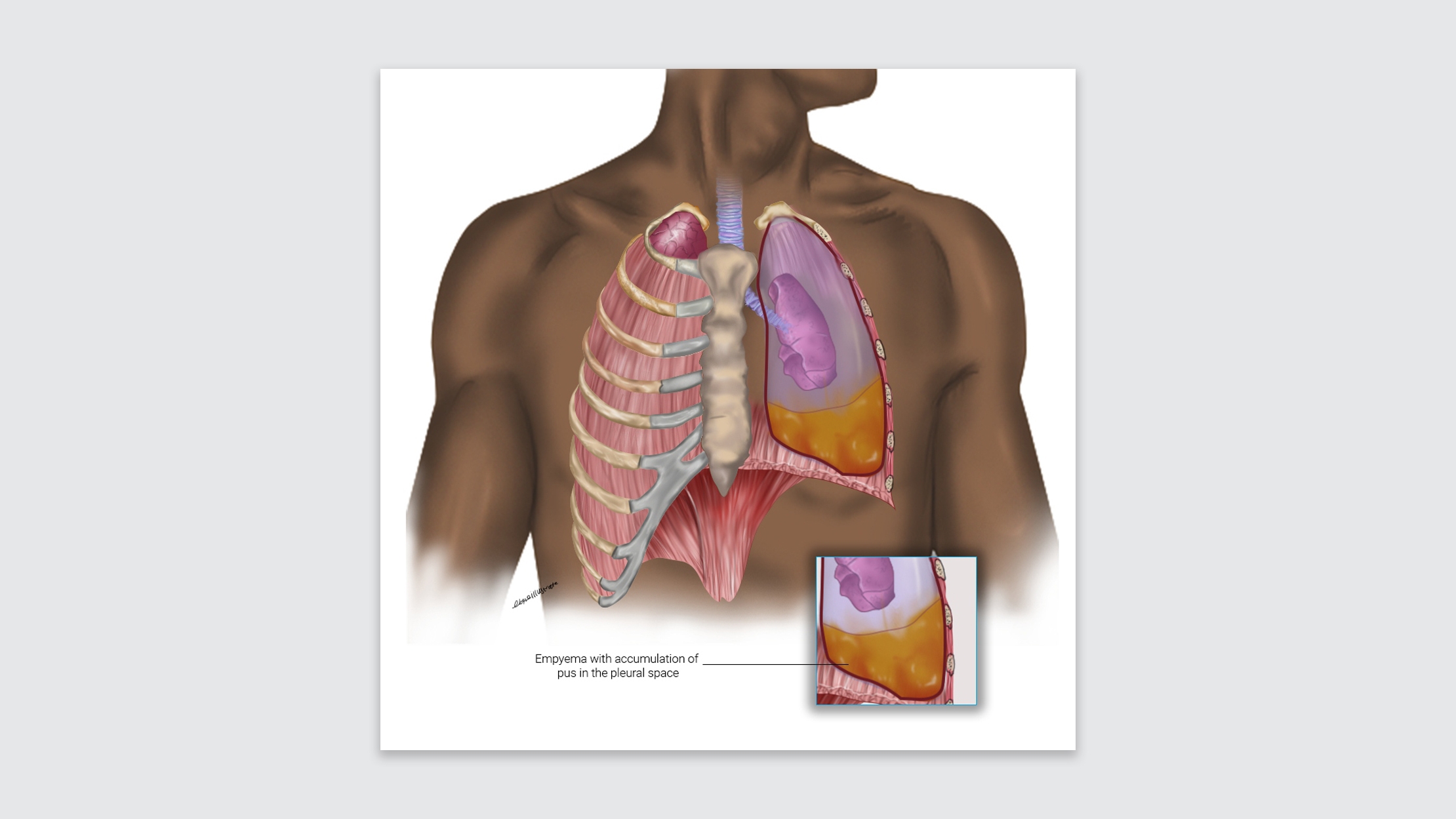
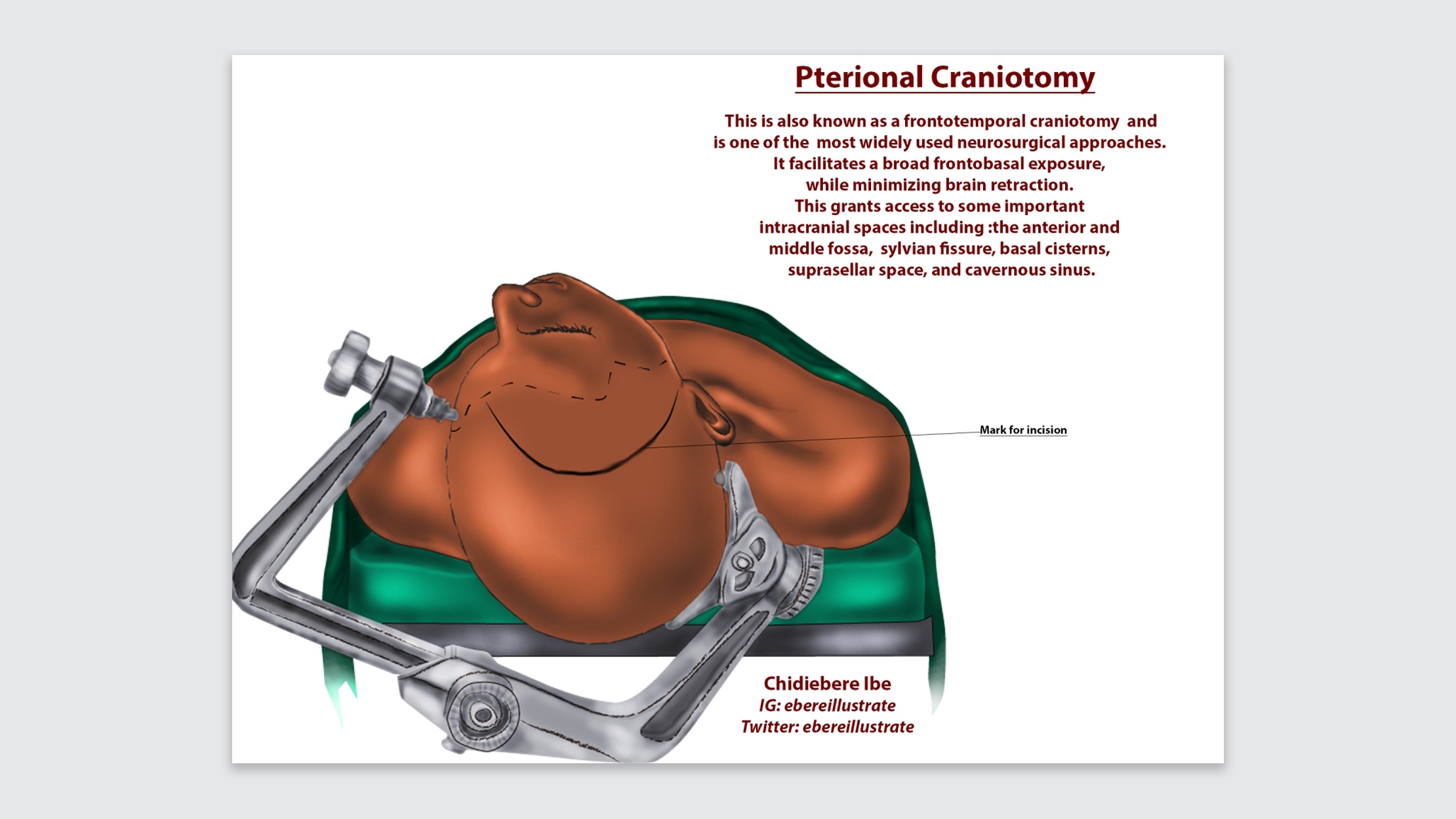
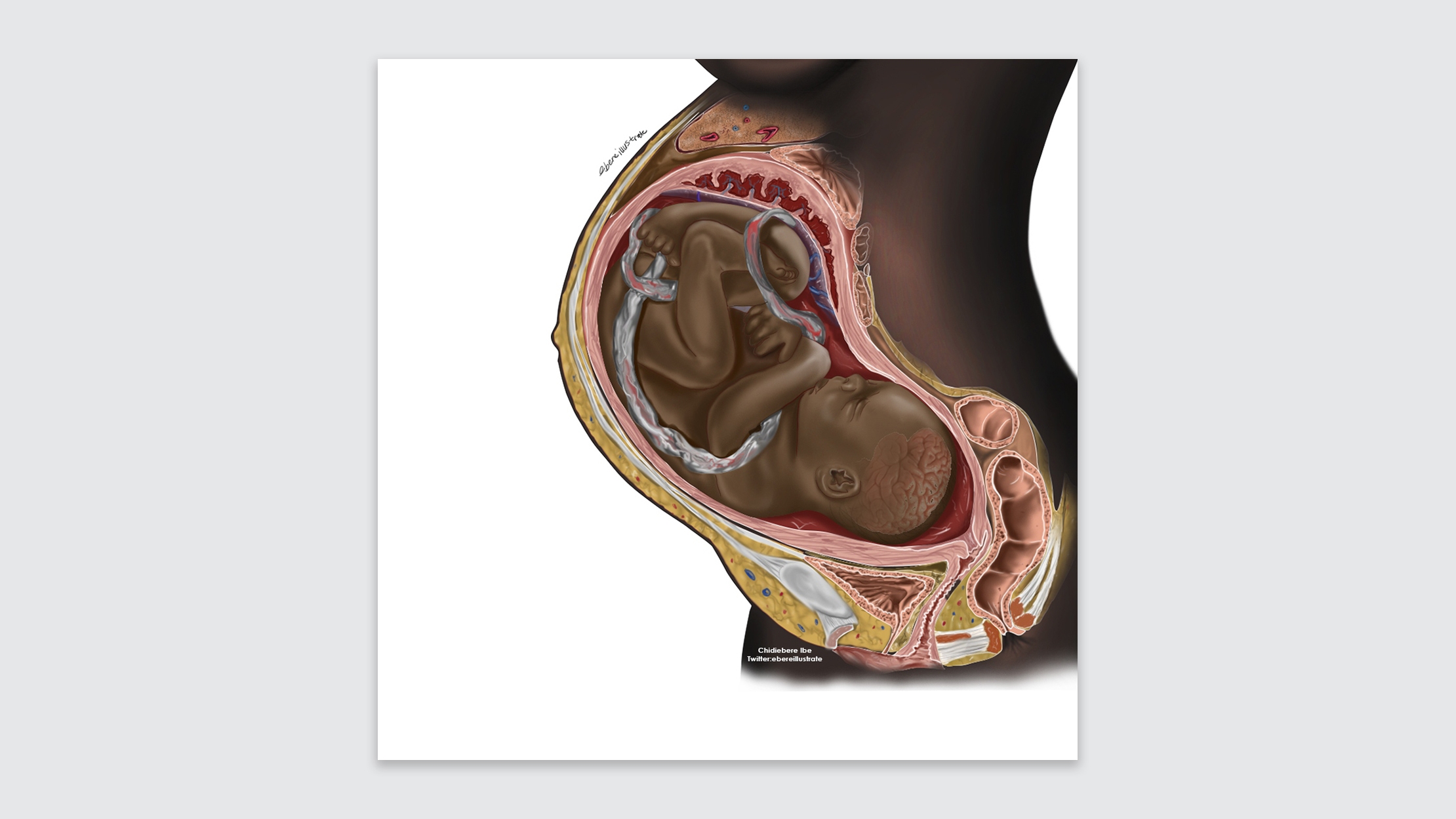
He's not incorrect: Studies have found that upwardly of 76% of bodies in beefcake textbooks feature white people. Ibe has taken it upon himself to make medical illustrations more various. He'south spent the last year drawing detailed pictures designed to be used in medical textbooks or public health announcements that feature Blackness bodies, roofing everything from childbirth and brain surgery to Blackness surgeons in the operating room. Ibe believes that these images aren't just for the Black customs; they can be used to help doctors of all races amend relate to their Black patients.
In the Us, there's a long history of the medical community dehumanizing Black people. Doctors regularly used enslaved people in medical experiments, cutting up their bodies without using anesthesia, even every bit they screamed in pain and bled to death. In more than recent times, white doctors conducted research on Black people without their consent, including the notorious Tuskegee Syphilis Study, which resulted in the expiry of 100 Blackness people between 1932 and 1972. Even today, there is a lot of evidence that doctors underestimate Black patients' pain and view them as less intelligent.
While in that location may be many reasons that doctors tend to dehumanize Blackness people, Ibe argues the fact that medical textbooks are filled entirely with white bodies greatly contributes to the problem. "A lot of medical research began in the West, so medical illustrations of white bodies is the norm," he says. "I don't think these textbooks are deliberately leaving Black bodies out. Only nonetheless, it sends the message that the medical needs of Black people aren't as important, or that we don't matter."
Just it also struck Ibe that the problem could be relatively piece of cake to correct. Passionate well-nigh condign a pediatric neurosurgeon, Ibe has long pursued art and illustration every bit a hobby. In the midst of the pandemic lockdowns last year, he was looking for something useful to do. A member of the organization, Association of Future African Neurosurgeons, Ibe found a mentor in Dr. Ulrick Sidney, who encouraged him to start creating these illustrations himself.
Before he could become started, Ibe had a lot to learn. For one thing, he had an onetime computer that didn't take graphic design software on it. He taught himself how to use Adobe Photoshop, and so he started mimicking medical illustrations, but using accurately drawn Black bodies. He kept returning to Sidney and other doctors in his network, to go their communication on making accurate drawings. "In that location are no online tutorials for this, so I had to teach myself everything," he says. "I relied on the mentorship and support of these doctors."
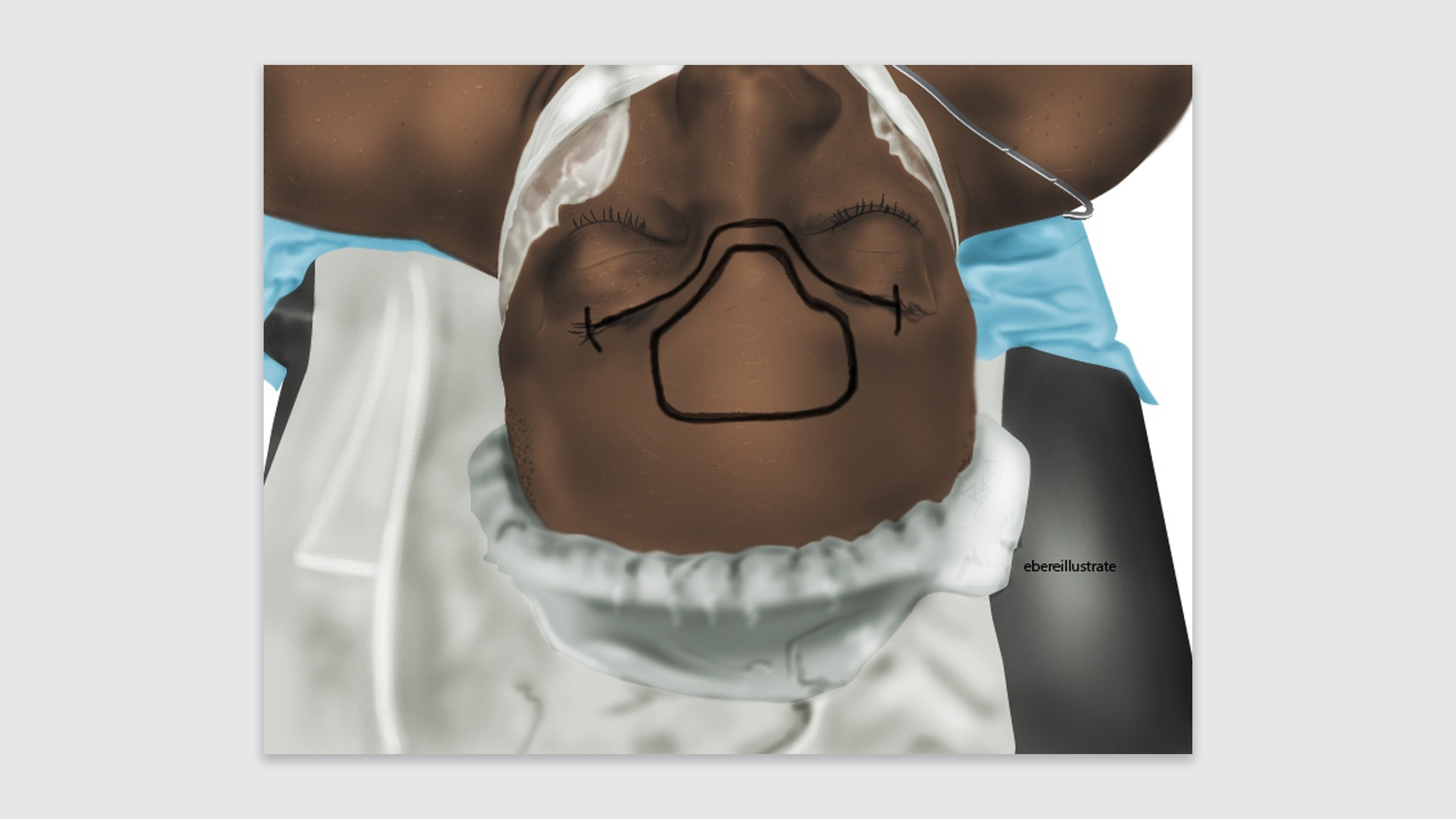
He began posting his illustrations on Instagram and Twitter, and they quickly went viral. Many people simply hadn't idea nigh the lack of diversity in medical illustrations. But Ibe says he was too stunned by some people'southward comments. "The illustration of a Black fetus got really interesting comments," he says, referring to his most well-known illustration that was shared hundreds of thousands of times on social media. "Some people didn't believe that babies were born with Blackness skin; they retrieve they are born white and then go darker. As a Nigerian, in a country total of Black people, I can assure you that is not true."
In Nov 2020, Ibe became chief medical illustrator for the Journal of Global Neurosurgery. This past summer, afterwards beingness accepted to Kyiv Medical School in Ukraine, Ibe started a GoFundMe campaign to raise money for his tuition. He too created a YouTube video, where he promotes his medical illustrations, discusses the lack of representation of Blackness bodies in medical textbooks and why it's so detrimental, likewise as his motivation for trying to modify the status quo.
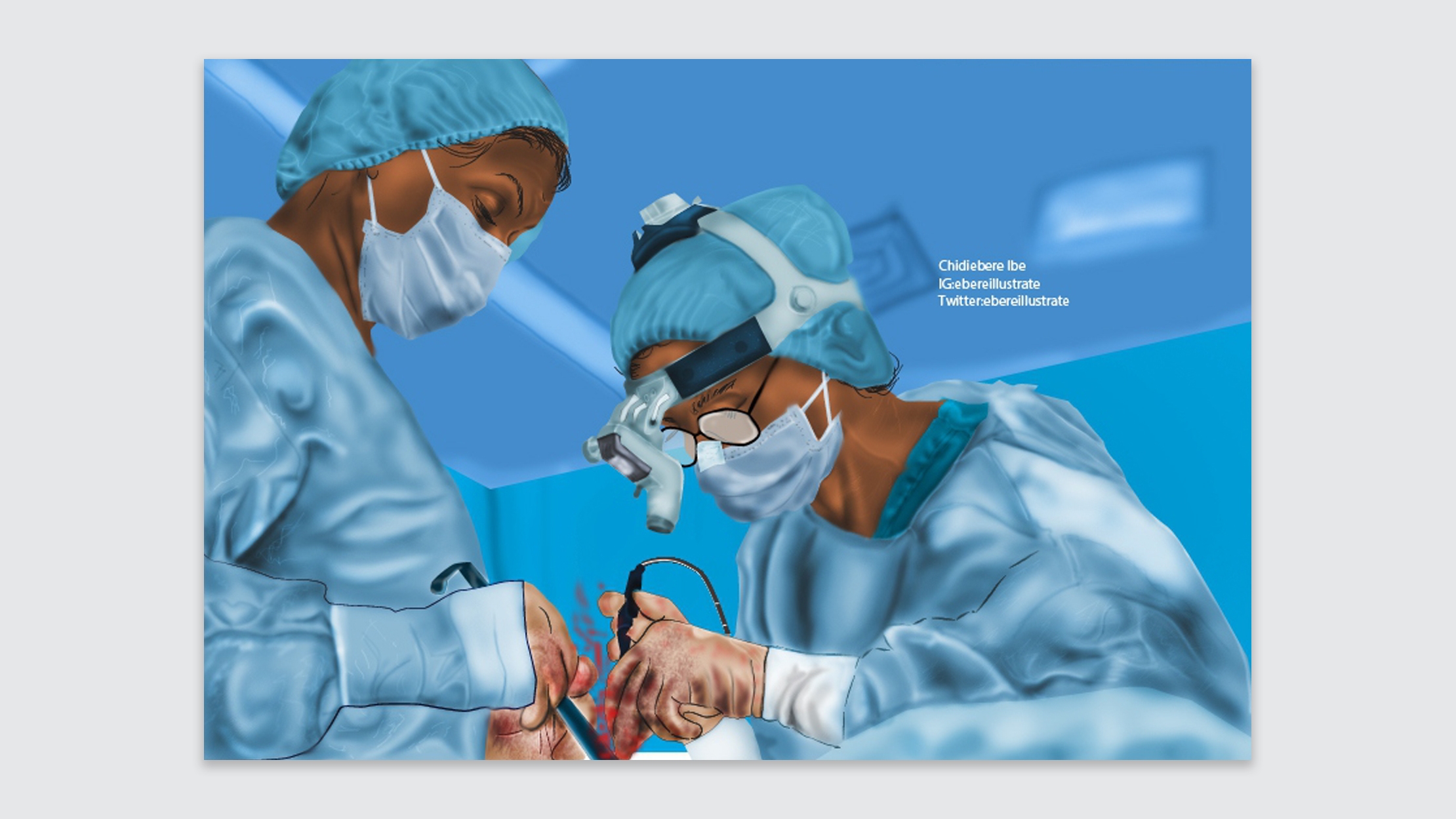
As for his piece of work every bit a medical illustrator, Ibe plans to go on posting these drawings. Many people accept asked how much he charges for his images, simply he insists he wants them to exist costless to use. "The problem is that public wellness organizations and doctors just don't have access to images of Black people," he says. "That'south role of the reason why we keep relying on images of white bodies. But I don't desire to exist the only illustrator doing this; information technology would be great if there were bodies of all races in our textbooks."
collinsimpeartale1949.blogspot.com
Source: https://www.fastcompany.com/90704704/doctors-have-dehumanized-black-people-for-centuries-this-illustrator-believes-art-could-help
0 Response to "An Artist Who Uses Art to Comment on the Dehumanizing Potential of Technology Is"
Post a Comment